Clinical manual therapy · Gladstone, Missouri
You will point at one place.
The hands usually end up somewhere else.
Soft tissue work for people who have a specific complaint and a specific reason for being here. One therapist, one room, no packages.
Almost everyone walks in and puts one finger on one spot. The spot is real. It is also, more often than not, the far end of something that starts elsewhere, because muscle runs in long continuous lines and the quiet end of a line can be the loud one.
What follows is a description of what a session in this trade tends to involve. It is not a diagnosis, it is not advice about your own pain, and nothing here is a claim to treat, cure or manage any condition. Massage is not a substitute for being examined. If something hurts, the person who should look at it is your own physician.
Six pairings, and the distance between them
Left is where people point. Right is where the working time actually goes. The distances are rounded illustrations written for this mockup, not measurements taken from anyone.
-
01
Where you point
The outside of the elbow, one small sore spot on the bone
Where the hands goThe whole forearm, wrist to elbow, and the back of the shoulder
The muscles that lift the back of the hand run the entire length of the forearm and anchor on the bone just above the elbow. The sore anchor is the last inch of a long line. Most of the working time goes to the length, and the last inch gets the least.
We stop and send you back out if the arm is weak rather than sore, or if the hand goes numb and stays numb. That is a question for a physician before it is a question for a table.
-
02
Where you point
One side of the low back, always the same side
Where the hands goThe front of the hip on that same side, and the belly of the thigh
A hip flexor runs from the front of the thigh up through the pelvis and attaches to the lumbar spine from the inside. It can be short and busy at the front while the back is the part you can feel. People who sit for a living meet this pairing more than anyone.
We stop and send you back out if pain runs past the knee, or if there is any change in bladder or bowel control. That is a same-day phone call to your doctor, not a rebooking.
-
03
Where you point
Behind one eye, or the temple above it
Where the hands goThe base of the skull and the top two inches of the neck
There is a group of very small muscles where the neck meets the head, under the ridge of bone you can find with your own thumbs. When someone points at the front of their own head, that group is where the session tends to go, and it is worked slowly and with very little force because there is not much room there.
We stop and send you back out for a headache that is the worst one you have ever had, or one that arrives with fever, a stiff neck or a change in vision. That is an emergency room and not an appointment.
-
04
Where you point
The top of the shoulder, the one everyone calls the knot
Where the hands goThe ribs under the armpit and the front of the chest below the collarbone
The muscle you can grab on top of your own shoulder is holding the shoulder blade up. What is drawing it forward and down sits on the other side of you, along the ribs and across the front. An hour spent only on the knot is an hour spent on the side that is losing.
We stop and send you back out if shoulder, arm or jaw discomfort arrives with shortness of breath, sweating or nausea. That is not a muscle question. Call 911.
-
05
Where you point
The outside of the knee, felt most on stairs going down
Where the hands goThe hip, above and behind, where the band is fed rather than where it ends
A long sheet of connective tissue runs down the outside of the thigh from the hip to just below the knee. It is not a muscle and it does not lengthen the way one does. The muscles feeding into it sit at the top, and that is where the hour goes. This is the widest gap on this page between the sore place and the working place.
We stop and send you back out for a knee that locks, gives way underneath you, or swelled within an hour of a specific injury. Imaging comes first.
-
06
Where you point
The heel, in the first ten steps out of bed and rarely after
Where the hands goThe calf, high up, near the back of the knee
The calf and the tissue under the arch of the foot are continuous around the back of the heel. Whatever the calf does overnight, the far end of that run wears in the morning. The foot still gets worked. It just is not where the time is spent.
We stop and send you back out for a heel that turned sore suddenly with a pop, or that hurts through the bone rather than the tissue. Physician first, table later if they say so.
The other half of the job is sorting out what you meant.
Tight is at least four different things
These are the five sentences said most often from the table, and what each one changes about the next twenty minutes.
“It’s tight.”
Under the hand that is at least four separate things.
A whole muscle short from end to end. One firm band inside a muscle that is otherwise soft. Skin and fascia that will not slide over what is beneath them. Or a joint at the end of its range with the muscle around it holding the line. They do not feel alike, they do not want the same pressure, and the first few minutes are spent deciding which one is on the table.
“There’s a knot right there.”
Almost always findable. Almost never a knot.
What is under the finger is usually a dense, tender band running along the grain of the muscle rather than a lump tied into it. That matters because a lump invites digging and a band responds to being followed. The direction of the work changes, the force mostly does not.
“It burns.”
A different report from “it aches”, and it changes the pace.
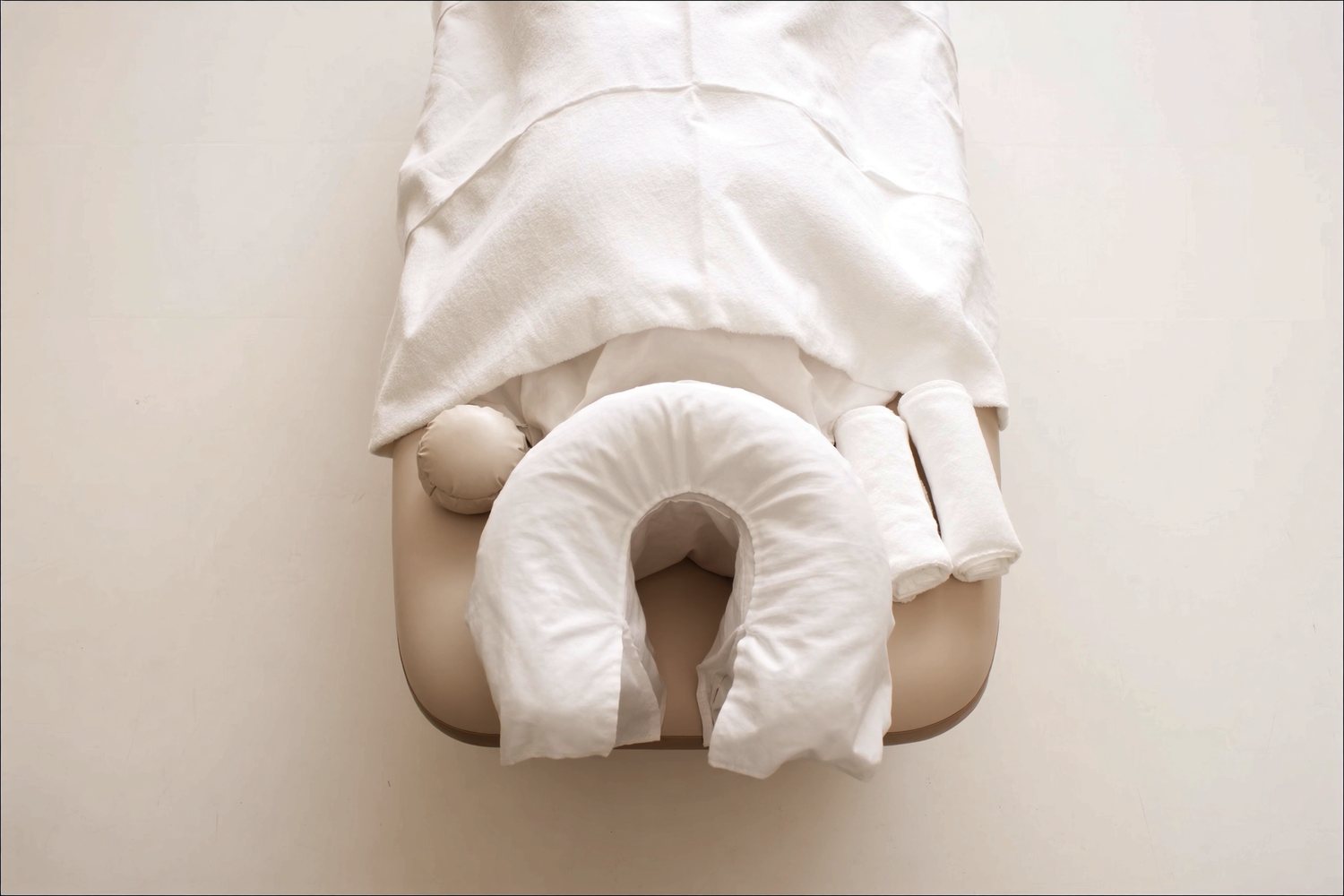
Aching under sustained pressure is ordinary and usually eases while the hand is still there. Burning that climbs the longer the hand stays is the signal to move, come out, and approach the same tissue from a different angle. Nobody has to earn their way through it.
“You’re not getting deep enough.”
Depth and force are not the same lever.
Tissue lets a hand in when it stops bracing, and it braces against speed more than against weight. Leaning harder on a guarded muscle mostly compresses the soft ones on top of it. Slower is usually what deeper actually means, which is an unsatisfying answer for about ten minutes and a convincing one by the end.
“Did you hear that click?”
A sound is not information on its own.
Joints make noise. Noise on its own says nothing about what state anything is in, and no one here will tell you otherwise or charge you for the sound. What gets reported back to you is what moved further than it did at the start, and what did not.
Things nobody tells you before the first one
- You undress to whatever you are comfortable with, and a fair number of people stay fully dressed. The work still happens, it just happens through cloth.
- The therapist leaves the room while you get on the table, and knocks before coming back in.
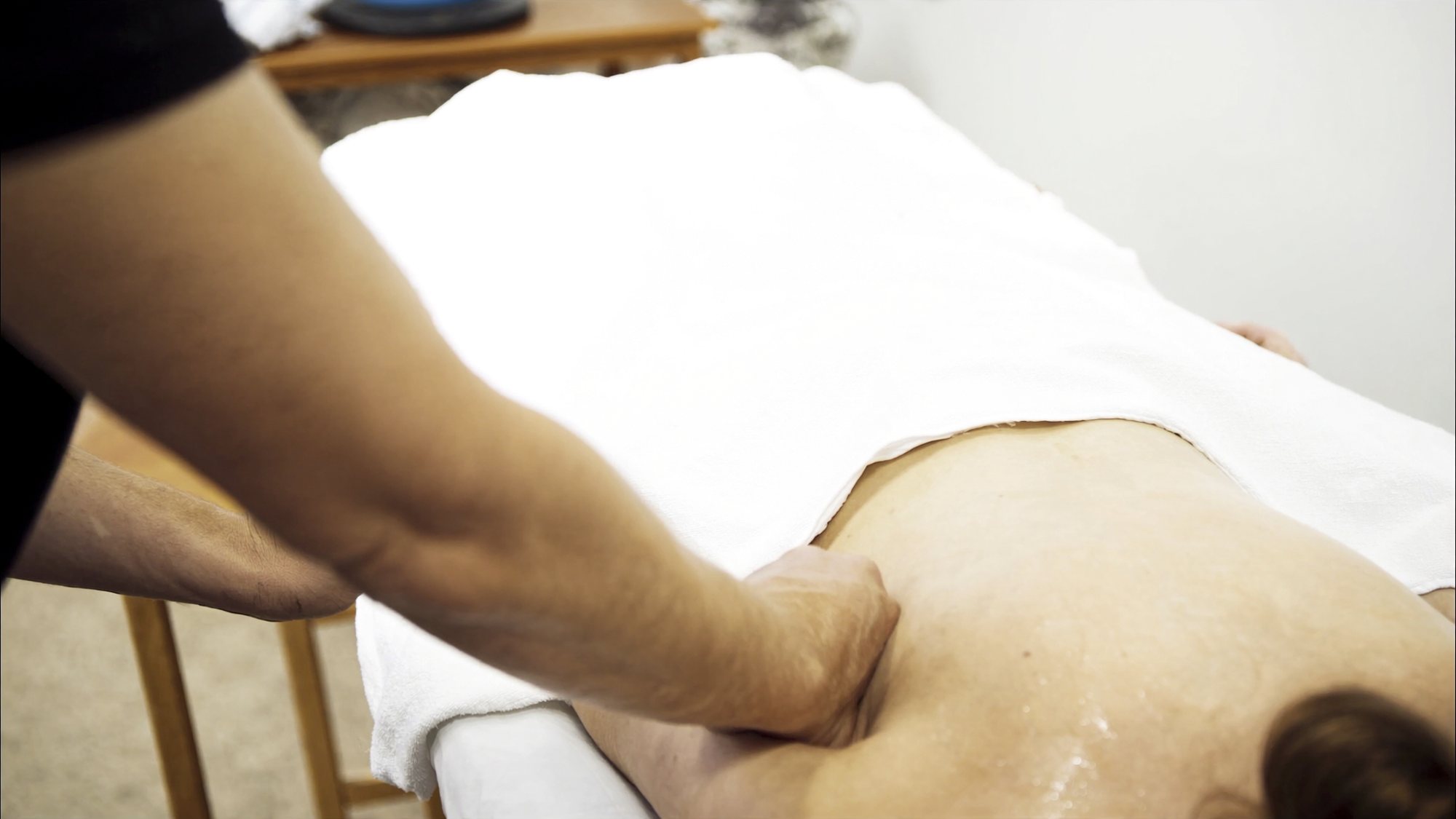
- You are under a sheet the entire time. Only the area being worked is uncovered, and it is covered again before the next area is opened.
- Pressure is not a score out of ten and you are not being graded. Say less, or more, and mean it. The right pressure is the one you can breathe through normally.
- If you say stop, the hands come off. That is the whole procedure and there is nothing you need to explain afterwards.
- Appointments here are written for 60 or 90 minutes, both figures illustrative for this mockup, and the first one runs shorter on the table because the start of it is spent talking.
When the answer is not this room
A fair share of the calls that come in are better answered somewhere else, and saying so on the phone costs nothing. Anything that arrived with a fall, a collision or a pop belongs to a physician first. Anything getting steadily worse week over week has stopped being a soft tissue conversation. Anything that comes with numbness that does not leave, weakness, fever or unexplained weight change is not ours at all. Nobody here will tell you what is wrong with you, because working that out is a physician’s job and no part of it happens on a table.
The reverse is true too. If a physician or physical therapist already told you what is going on and what they want worked, bring that with you. It makes the first ten minutes shorter and the rest of the hour better.
Booking happens on the telephone
There is no booking form on this page and there is no questionnaire. Health questions get asked out loud, in the room, by the person who is going to be doing the work.